The horror genre, as well as multiple other genres have made distinctive changes throughout time. Horror began with remakes of classic tales such as Dracula by Bram Stoker, and all the way towards modern horror genre and what that entails. Recent horror introduced 'teen drama'.
Friday, 23 October 2015

Tuesday, 20 October 2015
What is the importance of an opening sequence?
An opening sequence is extremely important to the success of a film. It establishes the genre and mood of the film just by an introduction to the setting. An opening sequence allows the audience to make quick assumptions and predictions based upon the genre and their previous knowledge of what lies within the particular genre. For example, the genre that we as a group have chosen is horror therefore, the audience would expect to be scared. The horror genre entails victims and some sort of villain, which can fall into the sub-genres of slasher or psychological, depending on what sort of villain it may be.
An opening sequence looks at the main characters which allows the audience to be introduced to them and make judgements on who they are and what role they will play within the film.Character analysis can be used to look at the characters that have been introduced and establish the plot based upon this. The final girl theory applies to this, sometimes the audience can distinguish who will take on this role from the very opening scene which allows them to make predictions for the remainder of the film. This allows the film to engage the audience from the beginning and encourage them to make a positive assumption of the remainder of the film.
An example of this is The Woman in Black which engages the audience and allows them to make predictions on the remainder of the film just based upon the first scene. The innocence of the adolescent girls emphasises the horror aspect that we be a continuation throughout the film. The horror is introduced due to the unnatural nature and actions of these girls, it allows the audience to engage early on and want to discover what led them to do what they did and how the remainder of the story will unfold. The audience becomes intrigued and it hooks them and allows them to continue watching the film in order to further their opinion and expectations.
An opening sequence looks at the main characters which allows the audience to be introduced to them and make judgements on who they are and what role they will play within the film.Character analysis can be used to look at the characters that have been introduced and establish the plot based upon this. The final girl theory applies to this, sometimes the audience can distinguish who will take on this role from the very opening scene which allows them to make predictions for the remainder of the film. This allows the film to engage the audience from the beginning and encourage them to make a positive assumption of the remainder of the film.
An example of this is The Woman in Black which engages the audience and allows them to make predictions on the remainder of the film just based upon the first scene. The innocence of the adolescent girls emphasises the horror aspect that we be a continuation throughout the film. The horror is introduced due to the unnatural nature and actions of these girls, it allows the audience to engage early on and want to discover what led them to do what they did and how the remainder of the story will unfold. The audience becomes intrigued and it hooks them and allows them to continue watching the film in order to further their opinion and expectations.
Monday, 19 October 2015
Insidious Opening Sequence
The opening sequence for Insidious mirrors many other horror films and their chosen opening sequences. It is set in a house and that is made apparent from the beginning. The normal family domestic setting is innocent and calm - this is juxtaposed with the unusual happenings that go on throughout the film. The scene is dark and dull with low lighting to emphasise the mystery and a fear of the unknown. The opening credits are red which has strong connotations with blood, death and fear which fits with the genre of the film. Throughout the opening sequence it is calm and innocent which is later juxtaposed with the violence of the horror within the remainder of the film.
Within the opening credits there is a creepy and mysterious soundtrack playing in the background. The non-digetic sound creates suspense and sets the mood for the type of film that it is going to be. Once the film has begun it is quiet which leads to a feel of a calm and peaceful setting. This is then juxtaposed with the digetic sounds of creaking noises from within the house and a ticking clock. The ticking clock creates suspense and fear for the audience which builds up throughout the film. The children also create innocence and vulnerability as well as the crying baby which also emphasises the innocence of the victims. The piano further implies a calm atmosphere which is disrupted by the baby crying. She then makes her way into the attic and the innocence of the victims begin to become apparent as a light flickers on and off as well as the digetic sounds that are used to emphasise the idea that something is wrong, this builds up the suspense and mystery.


Within the opening credits there is a creepy and mysterious soundtrack playing in the background. The non-digetic sound creates suspense and sets the mood for the type of film that it is going to be. Once the film has begun it is quiet which leads to a feel of a calm and peaceful setting. This is then juxtaposed with the digetic sounds of creaking noises from within the house and a ticking clock. The ticking clock creates suspense and fear for the audience which builds up throughout the film. The children also create innocence and vulnerability as well as the crying baby which also emphasises the innocence of the victims. The piano further implies a calm atmosphere which is disrupted by the baby crying. She then makes her way into the attic and the innocence of the victims begin to become apparent as a light flickers on and off as well as the digetic sounds that are used to emphasise the idea that something is wrong, this builds up the suspense and mystery.


Camera Shots and Angles
Camera Shots and Angles Prezi
Within my Prezi I briefly looked at the definitions of each camera shot and angle and a brief overview of how they are effective. Once I had become familiar with each shot and angle I began to think about which specific ones would be the most effective for my chosen genre.
Camera shots and angles are used within media in order to create the desired effect, whether this be to create dominance, confrontation or even add a dramatic spin to the scene. In particular, camera shots and angles can be used within my chosen genre of horror to create different effects and be used in a number of ways in order for the genre to be effective. For example:


Within my Prezi I briefly looked at the definitions of each camera shot and angle and a brief overview of how they are effective. Once I had become familiar with each shot and angle I began to think about which specific ones would be the most effective for my chosen genre.
Camera shots and angles are used within media in order to create the desired effect, whether this be to create dominance, confrontation or even add a dramatic spin to the scene. In particular, camera shots and angles can be used within my chosen genre of horror to create different effects and be used in a number of ways in order for the genre to be effective. For example:
- High angle: These kinds of shots are used in horrors and thrillers to make the figure or object that is being looked down on seem completely powerless and vulnerable.

- Close up: Close ups in these types of genres are used to see reactions on the actors face closely. This is the shot that shows the most emotion from the characters. It is also used to capture detail in an important scene.

- Tracking/panning shot: These shots connotes movement. This is used very effectively in horror and thriller films to make out a character is being followed or watched. It also could establish a scene so the audience can see the full view. Another way it can be used is by the camera moving in order to build up suspense therefore, you don't know what could be shown next. This emphasises the idea of thrill and excitement that an audience is expected to get from a horror film.

- Extreme long shot/long shot: This is used within a scene to establish the shot - it could put into perspective how deserted a house or town is in order to create mystery and thrill

- Over the shoulder shot: This shot can be used to build tension. This is used in a lot of horrors and thrillers to add suspense, and is used especially around mirrors and reflections so the audience can see what is happening as soon as the character does. This is used a lot to show a figure stood behind a victim.

- Low angles: Low angle shots are very powerful in the way that they can emphasise just how feared or intimidating a villain is. This could make you as the audience as well as the actors in the film feel weak and insignificant.
- Hand held camera shot: This is used often in horror/thriller films to add a sense of reality - this creates further fear as it gets the audience involved and adds to the horror of the scene as you feel like you are there. It feels closer to reality which causes fear within the audience which therefore to excitement and thrill.

Monday, 12 October 2015
Opening Sequence: The Conjuring
Opening sequences to films have a dominant purpose and impact on the success of a film based upon the initial interaction the audience come across. An opening sequence essentially sets the scene as well as the mood of the film from the beginning which helps the audience establish the genre and allow them to collate a brief prediction of the plot and what is to be expected.
An opening sequence engages the audience from the beginning and allows them to make a quick judgement on what sort of film this is going to be - the mood, setting, plot and character(s). The initial contact made with a character, usually the main character, allows the audience to engage and question who they are, what role do they play and how they will be important to the plot and outcome of the film. There may be an intriguing aspect to it such as it beginning part way through a situation or there could potentially be a car chase or an unexpected initial opening that creates mystery, confusion and potentially a sense of questionning that immediatley engages the audience.
For example, I have chosen to focus on the horror genre as I believe these can be one of the most effective opening sequences because it usually starts quite peaceful and then the audience begins to sense something not quite right until the plot unravels. Horror opening sequences create questionning due to the mystery that surrounds it as well as suspense and an increasing build up of tension. They also use effective non-digetic soundtracks in order to support the mood of the film and further create suspense. The horror genre is for adreniline lovers and trill-seekers therefore there needs to be an element of twist and surprise in order to fulfill these needs and expectations.


Sunday, 11 October 2015
Film Posters: Horror
Film posters are a form of advertisement to promote an upcoming film, they are used to interest and entice the intended audience to hook them in, and ensure the film is a success. Horror is a particularly intriguing genre for thrill-seekers. Film posters can be used to effectively promote a horror film - usually this involves a dark, mysterious and slightly scary in order to intrigue and excite the audience before they have even seen the trailer.
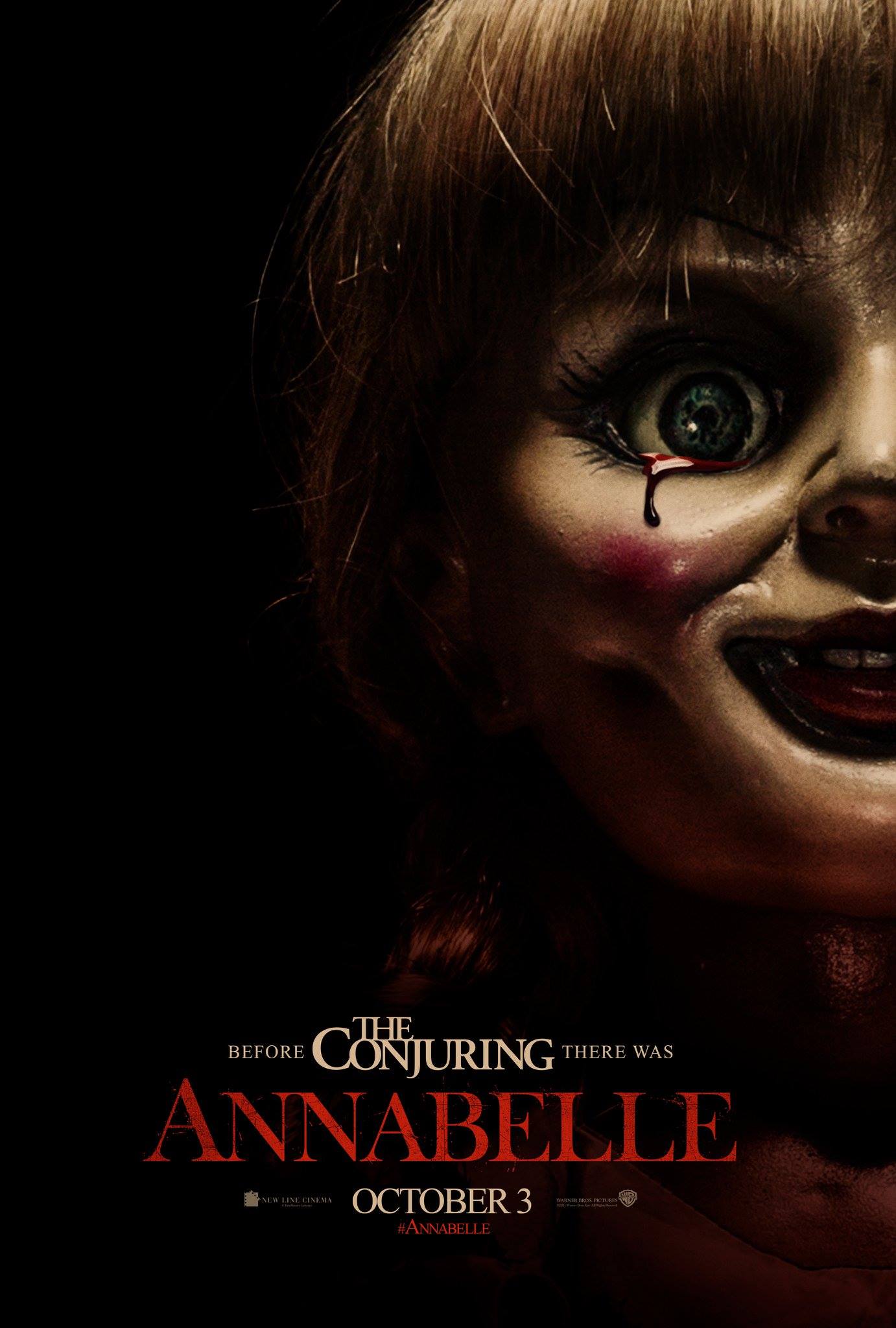
This particular film poster uses dark colours to create mystery and a sense of the unknown which creates fear for the audience as they aren't sure what to expect - the unknown. The close up shot of the doll is extremely intimidating as the eye is pointing directly towards the reader which emphasises the intended fear. The blood trickling down from the singular eye is used in order to further imply this unknown fear and mystery. The slight smile on the doll is essentially creepy and adds to the feel of the film poster and the expectations of the film. The colour red used for the blood, writing and the dolls lips creates a sense of danger. This film poster portrays many of the connotations associated with the horror genre, it is predictable to an extent as you know that there is going to be some sort of antagonist. In this case it is of the paranormal nature and takes the form of a doll, which looks frightening for the audience due to the innocent doll manipulated to show signs of horror. This includes the blood trickling blood from the eye and the smirking grin that emphasises the unnatural nature of the inanimate object.

This film poster is evidently sinister, it is extremely gruesome and fear provoking. The blood on the wall is red which suggests danger, this is also emphasised through the face within the blood. The girl in the poster looks almost possessed and out of her own control. The writing is red and trickling with blood which emphasises the danger and fear. It is fear provoking for the audience which therefore entices thrill-seekers. Horror films include blood, paranormal activity, an antagonist and a victim of some sort. The face within the blood is alarming and relates to the genre of horror due to its unnatural nature and frightening appearance. The off white/grey background has a sense of purity about it yet it has been manipulated and tampered with which has resulted in the innocence and purity no longer being there. The innocent girl with fair blonde hair and a white dress also portrays vulnerability against this antagonist which furthers the horror conventions.
The horror genre is predictable to an extent as the audience expects jumps and twists within the storyline, cliffhangers that leave you wondering what will happen next, an antagonist and a weak and vulnerable character that is effected by this horror aspect within the film. The innocent character is more often than not a girl with fair hair to portray innocence and purity - this looks into the Final Girl Theory.
Tuesday, 6 October 2015
Vladimir Propp Theory
Who was Vladimir Propp?
Vladimir Propp was a literary critic and a scholar who founded the idea that a certain type of character was to be used in every narrative structure. His theory has influenced many film makers to writing and producing successful narratives. Propp also suggested that all fairy tales follow a specific structure; a damsel in distress versus the hero that is trying to save her from her weak and vulnerable state.
These characters consist of:
The villain - fights the hero in some way causing conflict
The dispatcher - character who makes the villain's evil known and send the hero off
The (magical) helper - helps the hero in the quest
The princess/ damsel in distress - she is portrayed as weak and vulnerable, unable to save herself therefore must rely on the hero or prince (in fairy tales). She is usually seen as some sort of prize or possession that must be won over
Her father
The donor - prepares the hero or gives the hero some sort of magical object
The hero or victim/ seeker hero - reacts to donor, weds the princess
False hero - takes credit for the hero's actions or tries to marry the princess
Although this is commonly used within fairy tale type narratives, it is also commonly seen within other genres such as horror for example. This follows to the idea that the main character is a weak, vulnerable and innocent girl who is in desperate need of help. She is unable to help herself therefore relies on a strong, powerful man to 'save' her. This therefore conforms to representational stereotypes.
Vladimir Propp was a literary critic and a scholar who founded the idea that a certain type of character was to be used in every narrative structure. His theory has influenced many film makers to writing and producing successful narratives. Propp also suggested that all fairy tales follow a specific structure; a damsel in distress versus the hero that is trying to save her from her weak and vulnerable state.
These characters consist of:
The villain - fights the hero in some way causing conflict
The dispatcher - character who makes the villain's evil known and send the hero off
The (magical) helper - helps the hero in the quest
The princess/ damsel in distress - she is portrayed as weak and vulnerable, unable to save herself therefore must rely on the hero or prince (in fairy tales). She is usually seen as some sort of prize or possession that must be won over
Her father
The donor - prepares the hero or gives the hero some sort of magical object
The hero or victim/ seeker hero - reacts to donor, weds the princess
False hero - takes credit for the hero's actions or tries to marry the princess
Although this is commonly used within fairy tale type narratives, it is also commonly seen within other genres such as horror for example. This follows to the idea that the main character is a weak, vulnerable and innocent girl who is in desperate need of help. She is unable to help herself therefore relies on a strong, powerful man to 'save' her. This therefore conforms to representational stereotypes.
Monday, 5 October 2015
Levi Strauss Theory
The Levi Strauss Theory looks at the idea of binary oppositions, for example: human vs supernatural, strong vs weak etc. This idea investigates the different roles that are portrayed throughout media and in particular film. As an example, the idea that women are portrayed as weak and vulnerable, somewhat the 'damsel in distress' type character and on the opposing end men are dominant, strong and superior in some respects. This idea is also translated throughout the horror genre of life vs death, human vs supernatural. This idea allows for the audience to show a direct comparison between the opposing characters and how this obides by or challenges stereotypes and what is usually expected from those roles and specific characters portrayed.

Thursday, 1 October 2015
Narrative
Although it may not seem obvious there is a distinctive difference between story and narrative. The story is quite literally what happens within it,whether it be a film or a novel. This consists of a basic format with no sense of engaging the audience to help them understand not only what is happening but why it is happening. This is where narrative comes in, the purpose of this is to guide us through in terms of how we are meant to feel and reaction to the story. The narrative helps the audience to understand the story in detail as well as creating a sense of empathy in order to engage them within the media text.
There are nine narrative types to consider, these being:

There are nine narrative types to consider, these being:
- Linear Narratives
- Non Linear Narratives (AKA Fractured Narratives)
- Tvetzan Todorov: Equilibrium
- Classical Hollywood Cinema
- The Oedipal Trajectory
- Counter Hollywood Cinema
- Roland Barthes: Semiotic Codes
- Claude Levi Strauss: Binary Opposition
- Vladimir Propp

Subscribe to:
Comments (Atom)